Don't Cheap Out on Your Snorkel Kit: Here's What Actually Makes a Difference
Every year, we watch the same scene play out at snorkel sites around the world. Someone shows up with a fogged-up mask they bought at a souvenir shop, a snorkel that floods every time a small wave rolls through, and fins that are either two sizes too big or cutting into their heels. They spend the first twenty minutes fighting their equipment, miss half the marine life, and come back to the boat frustrated.
It doesn't have to go that way. Good snorkeling gear isn't about spending a fortune — it's about understanding what actually matters for the kind of snorkeling you plan to do. We've seen enough gear across enough different water conditions to have some strong opinions on this, and we're happy to share them.
Start With the Mask: This Is Non-Negotiable
Your mask is the single most important piece of equipment in your kit. A poor-fitting mask leaks constantly, forces you to interrupt your time in the water to drain and readjust, and can kill the experience entirely. A good mask that seals properly to your face? You forget it's there.
What to look for in a fit: Before you buy any mask, press it gently against your face without using the strap. Inhale slightly through your nose. A properly fitting mask will hold its suction without you holding it in place. If it drops immediately, the skirt isn't making full contact with your face — try a different shape or size.
Single-lens vs. dual-lens: Single-lens masks offer a wider, less obstructed field of view, which is great for spotting marine life. Dual-lens masks (with a separate pane for each eye) tend to fit a wider range of face shapes and can accommodate prescription lenses for those who need them. Neither is objectively better — it comes down to fit and personal preference.
Full-face masks: These have become popular with casual snorkelers in recent years, and they do offer some advantages — you breathe naturally through both mouth and nose, and the panoramic view is genuinely impressive. However, full-face masks have real limitations: they're not suitable for freediving or duck-diving below the surface, some models have been associated with CO2 buildup concerns in low-quality versions, and they're harder to clear if water gets in. If you plan to do anything more than floating on the surface, stick with a traditional mask.
Tempered glass vs. plastic: Always choose tempered glass lenses. Plastic scratches almost immediately and distorts your view in ways that are subtle at first and maddening over time.
The Snorkel: Simpler Than You Think, But the Details Matter
A snorkel's basic job is to let you breathe while your face is in the water. The variations in how well different snorkels accomplish this are bigger than most beginners expect.
Dry-top vs. semi-dry vs. classic: Dry-top snorkels have a valve at the top that seals when submerged, preventing water from entering. They're excellent for surface snorkeling in choppy conditions and for beginners who haven't yet mastered the snorkel-clearing technique. Semi-dry tops have a splash guard that reduces (but doesn't eliminate) water entry. Classic open-top snorkels are the simplest design and the preferred choice for more experienced snorkelers and freedivers who want to duck below the surface without the valve mechanism creating resistance.
Purge valves: Many snorkels include a one-way purge valve at the bottom of the tube that makes clearing water easier — you just exhale sharply and the valve does the work. These are genuinely useful for beginners. The tradeoff is that purge valves can wear out or collect sand, so they require a bit more maintenance.
Bore size: The internal diameter of the snorkel tube matters. Wider bore means easier breathing with less resistance — important during any kind of exertion. Narrower bore is lighter and more streamlined. For casual surface snorkeling, either works. If you're planning to freedive or snorkel against any current, go wider.
Fins: The Difference Between Effortless and Exhausting
Fins are where a lot of snorkelers make their biggest mistakes — either skipping them entirely or grabbing whatever's cheapest without thinking about fit or blade design.
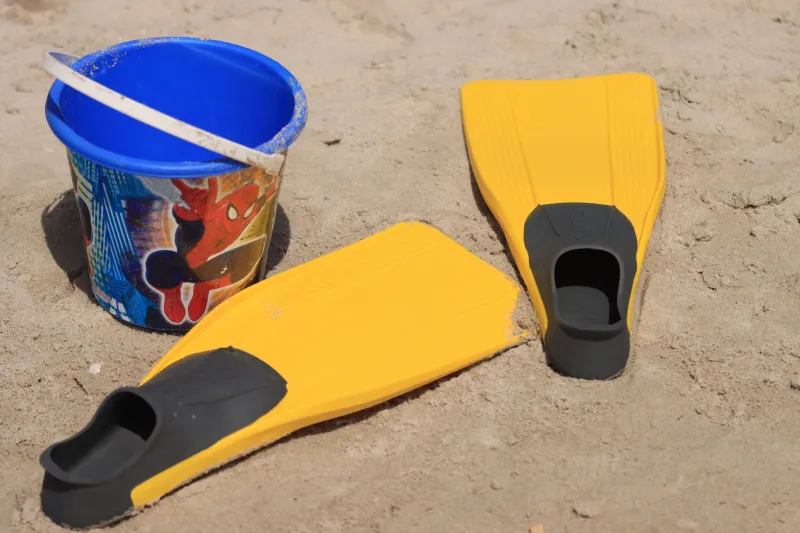
Full-foot vs. open-heel: Full-foot fins slip on like a shoe and are ideal for warm-water snorkeling when you're barefoot or wearing thin neoprene socks. They're lighter and more streamlined. Open-heel fins have an adjustable strap and are designed to be worn with dive booties, making them the better choice for cold-water destinations or when you'll be walking on rocky surfaces to access entry points.
Blade length and stiffness: Shorter, softer blades are more forgiving for beginners and less tiring over long sessions. Longer, stiffer blades generate more thrust per kick — great for covering distance or dealing with current, but they demand more from your leg muscles. Most recreational snorkelers are better served by a medium-length, medium-stiffness blade than by going to either extreme.
Fit is everything: Fins that are too loose will rub and blister. Fins that are too tight will cramp your feet within twenty minutes. Always try fins on (or at least size carefully when ordering online) and wear the same foot covering you plan to use in the water.
Wetsuits and Rash Guards: More Than Just Temperature Control
Even in warm water, some form of body coverage is worth considering. Sun exposure while snorkeling is intense — you're horizontal at the surface with UV hitting your back directly for extended periods. A lightweight rash guard or a thin 1-2mm shorty wetsuit provides meaningful sun protection while adding a small amount of thermal insulation.
For cold-water destinations — think California, the Pacific Northwest, or high-altitude freshwater spots — a proper wetsuit becomes essential rather than optional. A 3mm full wetsuit handles most conditions in the 65-72°F range. Colder than that, step up to 5mm. The fit matters as much as the thickness: a wetsuit with too much space between the neoprene and your skin loses its insulating efficiency quickly.
Anti-Fog Solutions: The Overlooked Essential
No matter how good your mask is, it will fog if you don't treat it. New masks especially need to be broken in — the manufacturing residue on the lens actively promotes fogging until it's removed. A light scrub with non-gel toothpaste on a new mask, rinsed thoroughly, makes a noticeable difference.
For ongoing use, dedicated anti-fog drops or gel applied to a clean, dry lens before each session work well. The old diver's trick of spitting on the lens and rinsing with a small amount of seawater is genuinely effective in a pinch and costs nothing.
What to Spend
You don't need to spend $500 to snorkel well. A quality entry-level mask from a reputable brand like Cressi, Mares, or Tusa runs $40-$80. A solid snorkel is $20-$50. Decent fins for warm-water use can be had for $30-$60. That's a complete kit for under $200 that will serve you well for years across dozens of trips.
Where it's worth spending more: if you're snorkeling frequently in cold water or challenging conditions, investing in a quality wetsuit ($150-$300) pays for itself quickly in comfort and extended time in the water.
The bottom line is straightforward. Good gear doesn't make a great snorkeler, but bad gear makes a miserable one. A mask that fits, a snorkel that breathes freely, and fins that don't hurt your feet — that's the foundation for everything else. Get those three things right, and the ocean does the rest.